ARLES · FRANCE
What the Photograph Couldn’t Hold
Some places are more vivid in memory than they ever were in a photograph.
Even a beautiful photograph can miss something. It keeps the light, the colour, the shape of a street. But a place is never only what the eyes can catch.
Taste. Scent. Air against the skin. Voices passing. Footsteps disappearing around a corner.
It becomes a feeling.
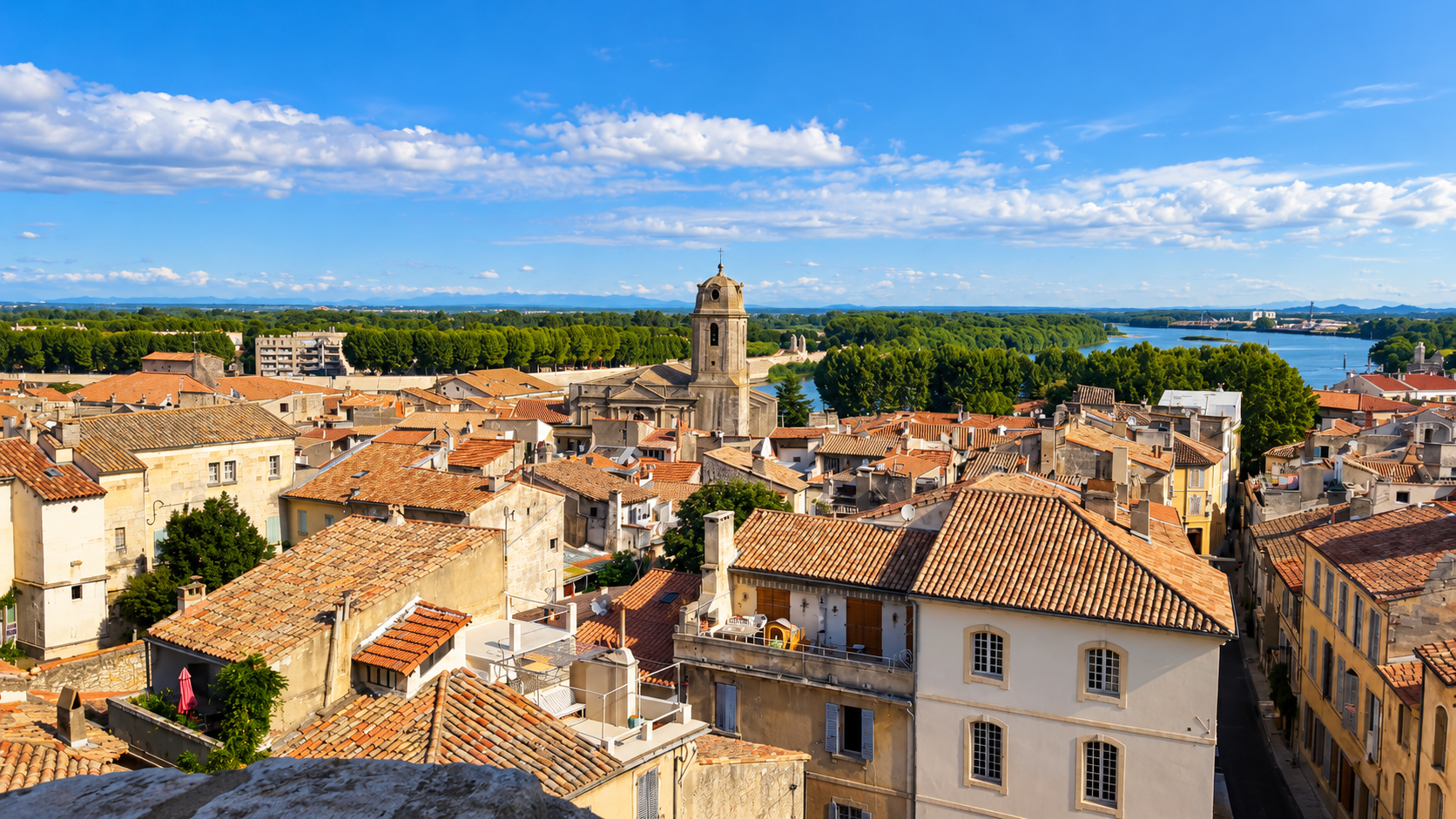
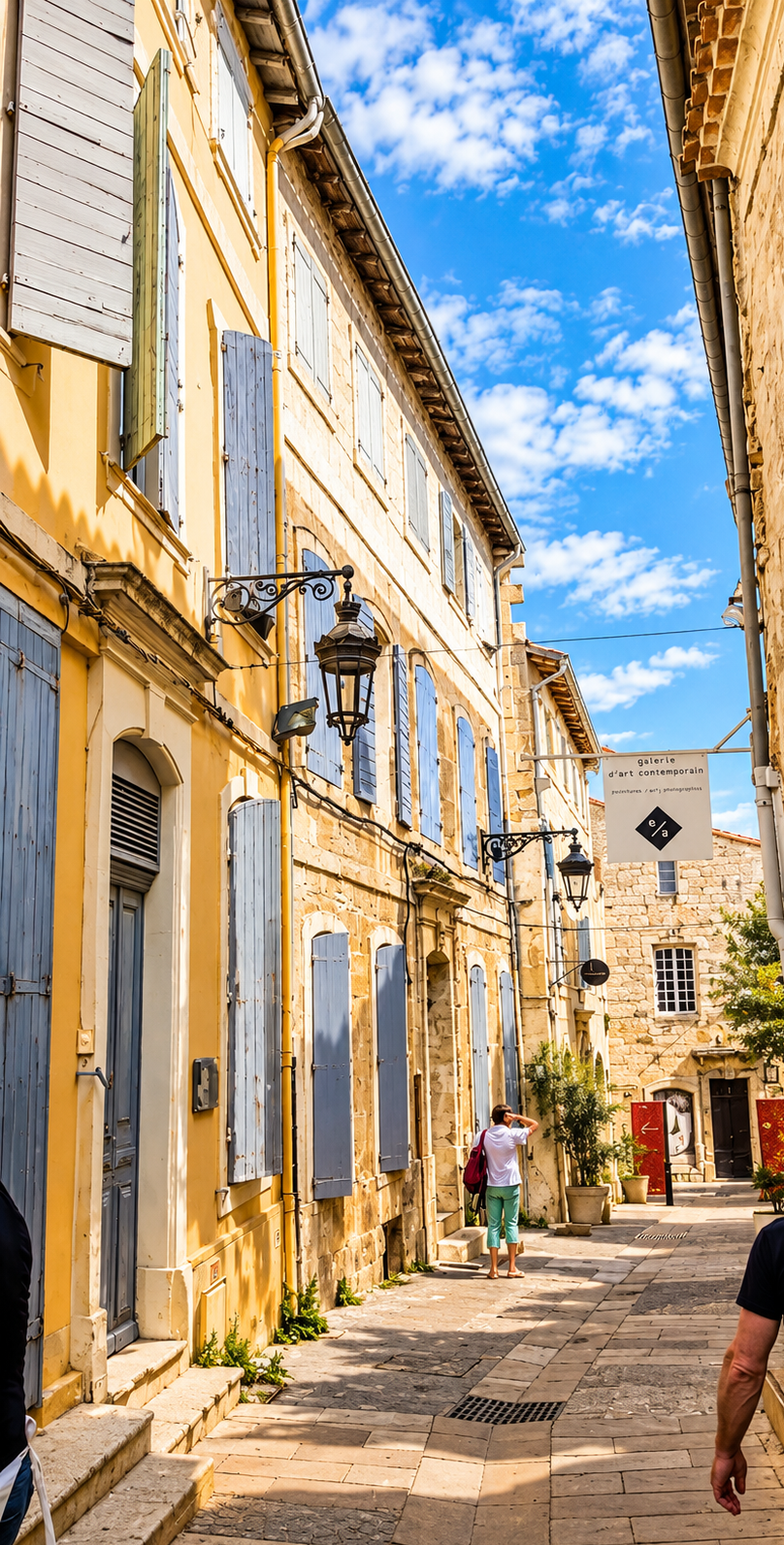
A stolen photograph
A narrow street in Arles. A man walks a little ahead, unaware of the camera behind him. Nothing is posed. Nothing has been arranged for remembering.
Old walls. Faded shutters. Blue-green against yellow stone. An almost impossible blue sky.
The photograph caught all of that. What it could not catch was what it felt like to walk there.
The quiet inside the city
The streets were busy, but Arles never seemed loud. People passed. Conversations drifted between tables — relaxed, happy. Nothing seemed to demand hurry.
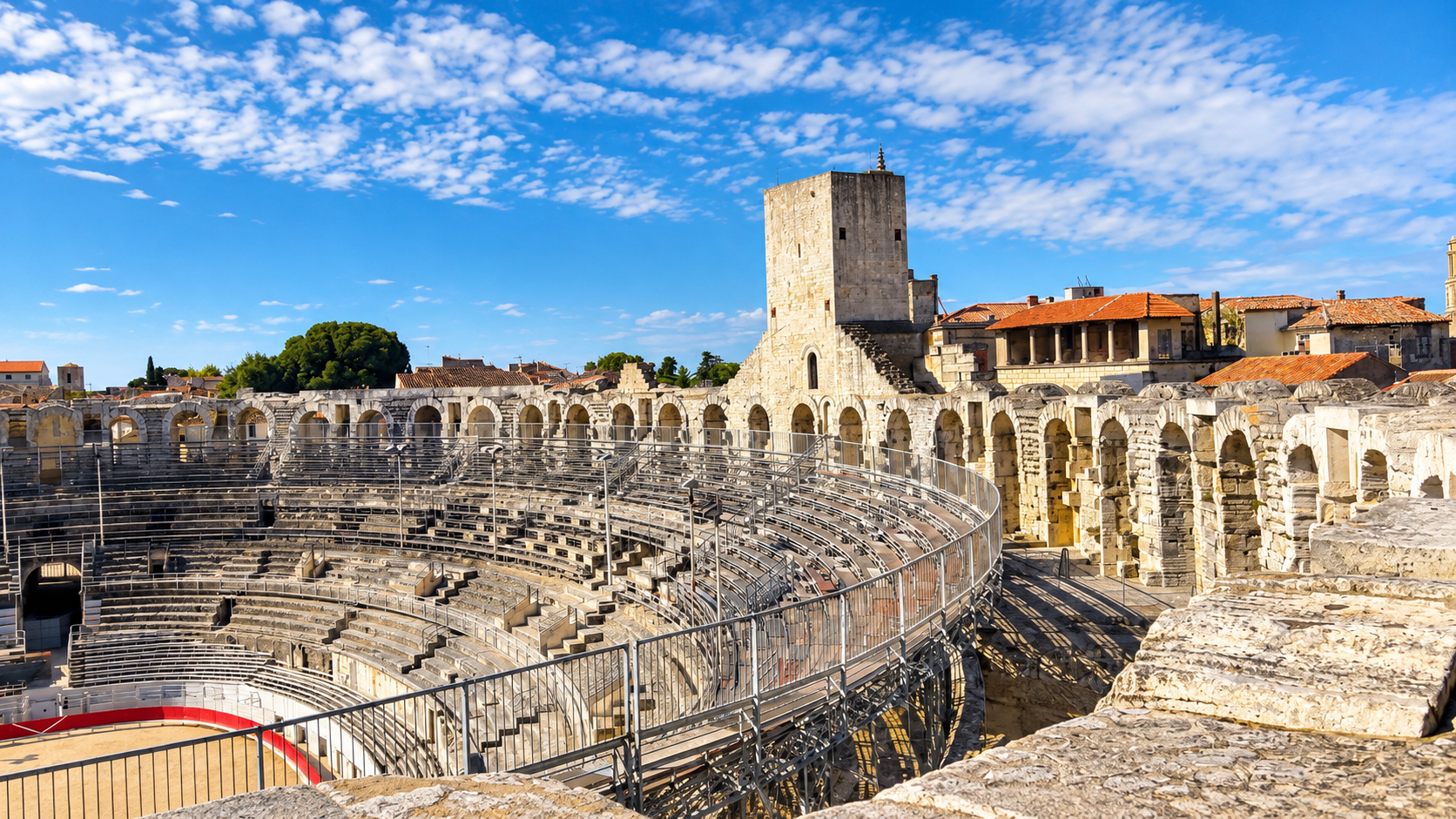
Inside the amphitheater, voices became echoes.
Stone. Shadow. Open sky. A place that had already held so many lives, quiet for a moment.
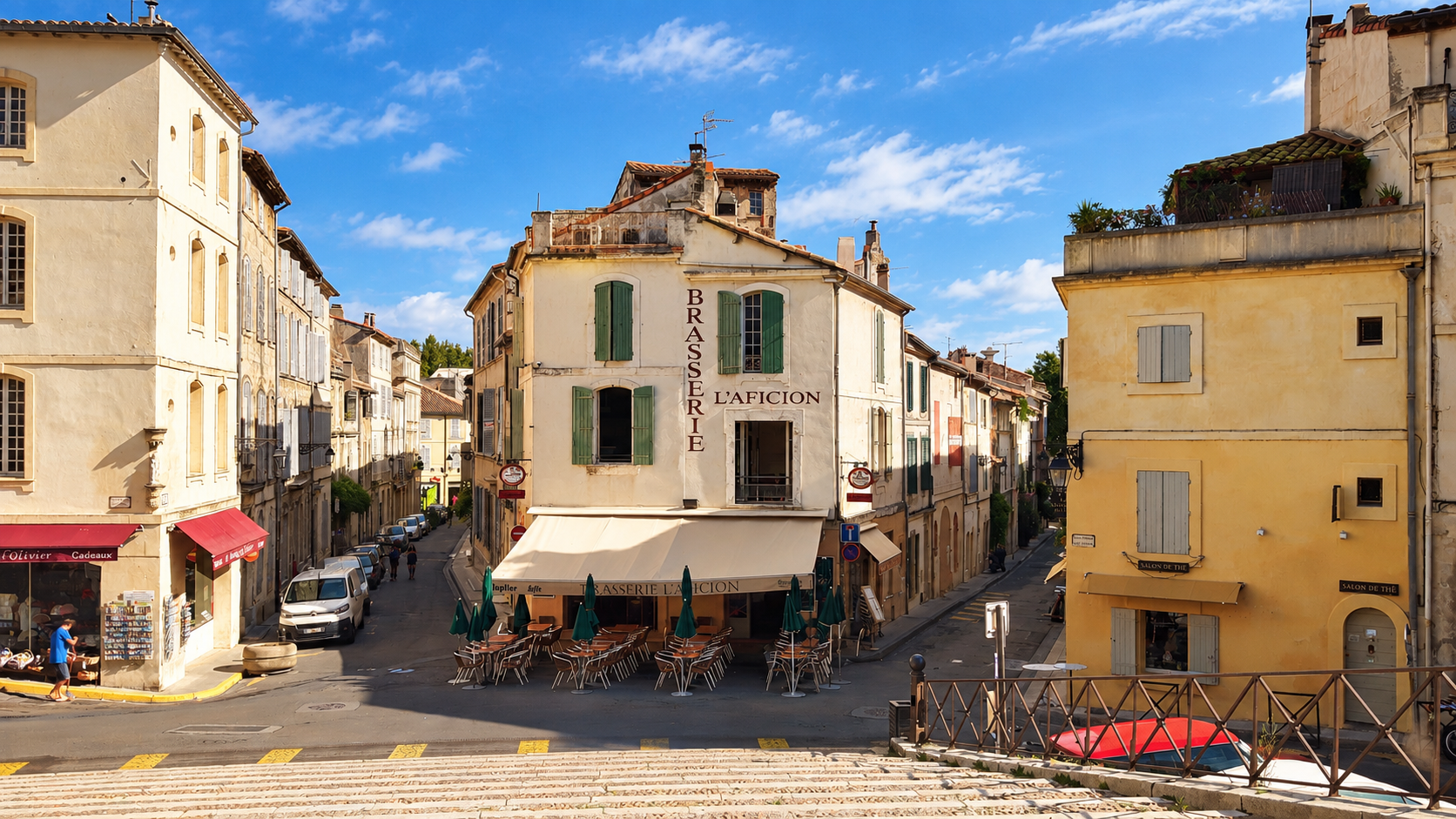
A table for two
A small table on a tiny street. Other tables nearby. A cheerful server. Pizza. White wine.
That is how the afternoon stayed in memory.
The photograph kept something else: a glass of beer on the table. Perhaps there was beer too. Perhaps it belonged to another moment. Nearly ten years later, the photograph and the memory no longer agree on every detail.
Perhaps they don’t need to.
What stayed was the unhurriedness of it.
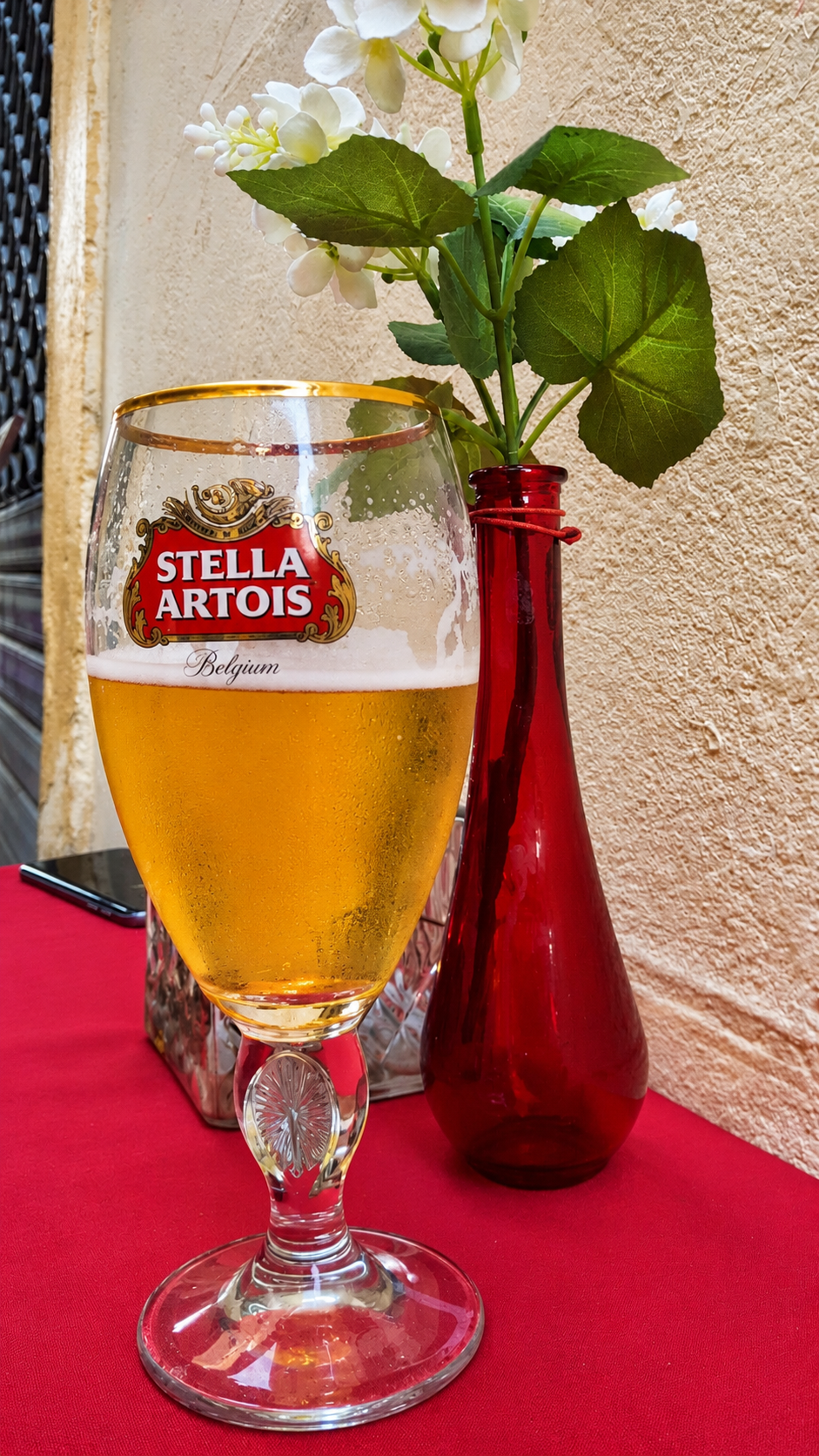
A small table. A shared meal. Nowhere else that needed attention.
The drink was never what stayed. The afternoon did.
What memory did with it
Years later, the street became a painting.
The photograph had preserved the scene. The painting preserved something different.
Some details grew louder. Others fell away. Colour shifted from evidence into memory.
Perhaps this is how places remain: not as perfect reproductions, but as fragments intensified by feeling.
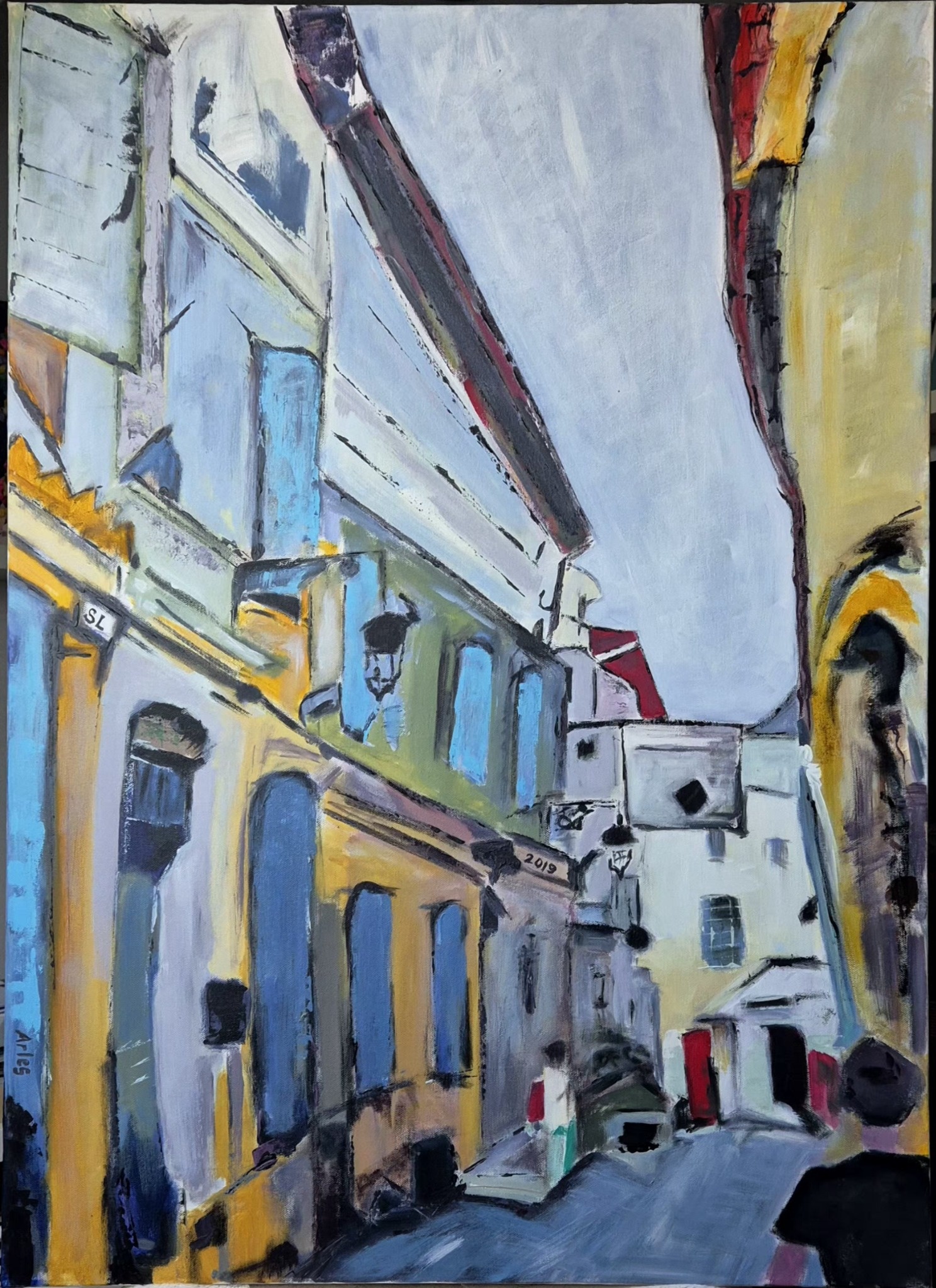
Arles, painted from the photograph in 2019.
What came home
Every morning, the city seemed to wake to lavender. The remembered ritual is simple and vivid: shops throwing lavender water into the streets, the scent meeting the morning before the day had properly begun.
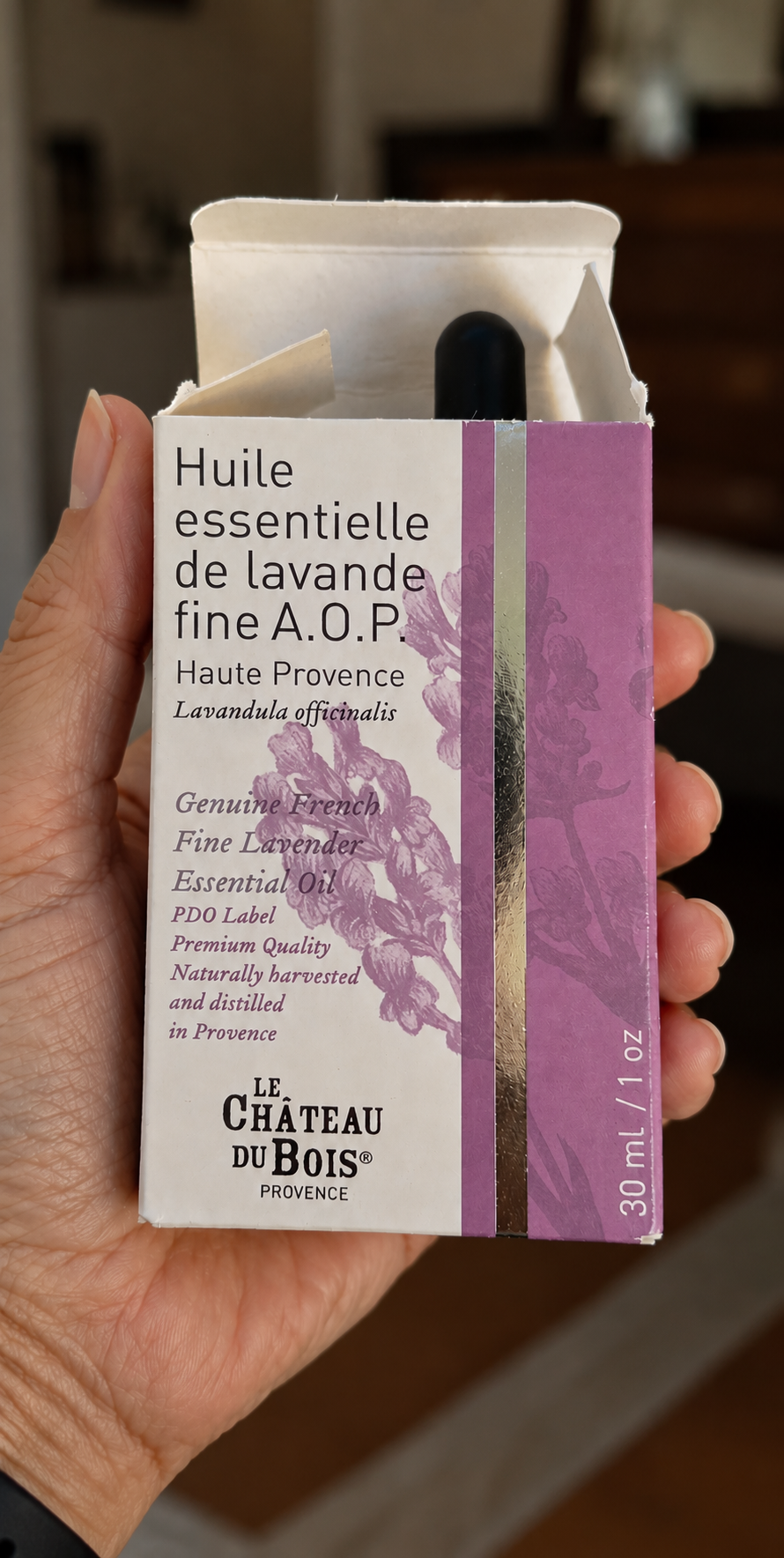
A bottle of fine lavender oil came home from Arles. There was hesitation at the price. The woman in the shop offered a promise instead: it will last ten years.
Almost ten years later, the bottle is still half full.
Some souvenirs become clutter. Some become a way back.
The personality of Arles
In memory, Arles has the personality of an old room that is still being lived in: old buildings, books and paintings; soft pillows, coffee and perfume. Nothing feels preserved behind glass. It is alive, but quiet. Understated. Classic.
There is a subtle sweetness to it, but never too much. The old and the new seem to contradict each other and belong together at the same time. Arles can make the present feel like another time without ever leaving the present.
And somehow, the skin feels at home.
If Arles were a scent
It would begin with shy lavender — herbal rather than floral, present without announcing itself. Fresh cotton and a trace of salt air would keep it airy. Old stone would sit underneath: dry, mineral, sun-worn. A little clean musk would soften the edges, and somewhere almost imperceptibly, the smell of seaweed.
Not a lavender field. Lavender carried through an old Mediterranean town.
A photograph can remember where a moment happened. Scent, taste, sound and memory keep what lived beyond the frame.